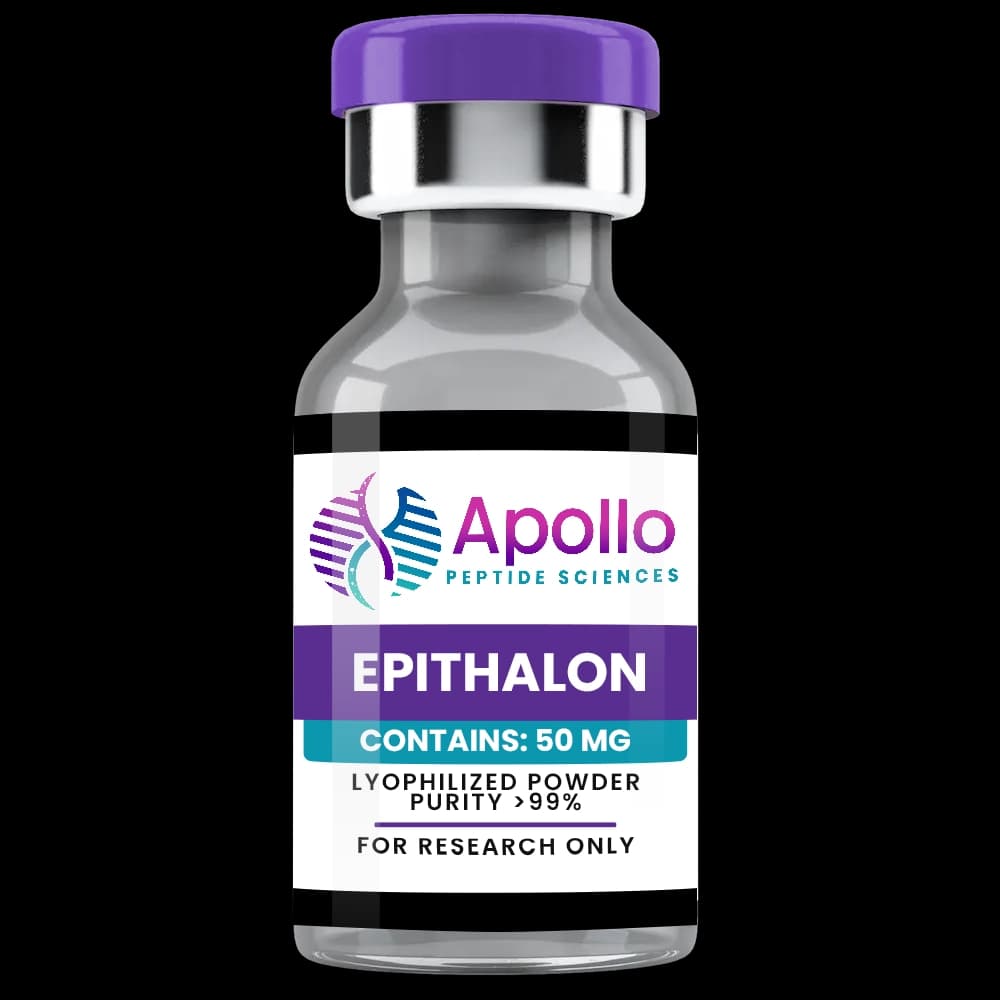
Epithalon
The Telomere Lengthening Protocol
Activates telomerase to rebuild telomere caps — the only known compound to achieve measurable telomere lengthening. Profound sleep improvement and biological age reversal.
Telomere ↑
Effect
10–20 days
Protocol Length
1–2× / yr
Frequency
Starting From
$139.99
Sold By
Apollo Peptide Sciences
Suggested Protocol
Standard research protocol: 5–10mg per day for 10–20 consecutive days, 1–2× per year. Some researchers use 100mcg/kg body weight per day. SubQ injection. The annual or bi-annual cycle protocol is aligned with the original Khavinson research showing long-term benefits from periodic treatment.
Can You Actually Reverse Cellular Aging? What the Telomere Data on Epithalon Shows.
Epithalon — L-Alanyl-L-glutamyl-L-aspartyl-glycine — is a synthetic tetrapeptide derived from the pineal gland hormone Epithalamin. It holds a unique position in peptide research as the only compound with published human data demonstrating measurable telomere lengthening — the lengthening of the chromosomal caps whose progressive shortening is one of the primary molecular mechanisms of cellular aging.
Telomeres are the protective end-caps on chromosomes that shorten with each cell division. When they become critically short, cells enter senescence or apoptosis — unable to divide and maintain tissue function. Telomere length is one of the most reliable biological markers of cellular age, and telomere shortening is causally linked to cancer risk, cardiovascular disease, and immune dysfunction. Epithalon activates telomerase — the enzyme that rebuilds telomere caps — creating the conditions for cellular renewal rather than degeneration.
Beyond telomere biology, Epithalon demonstrates remarkable breadth of anti-aging effects: it normalizes melatonin production (which declines with age, explaining the sleep architecture improvements users consistently report), exhibits antioxidant activity, modulates immune function, and has demonstrated oncostatic (cancer-limiting) properties in animal models.
Human data from Russian longevity researcher Vladimir Khavinson's 12-year study showed reduced cancer incidence and all-cause mortality in elderly subjects receiving periodic Epithalon treatment — the most significant human longevity data published for any peptide compound. Apollo's 50mg vial provides substantial research quantities at accessible cost.
The Telomere Problem
Why Chromosomal End-Caps Are the Biological Clock — and What Happens When They Run Short
Every time a cell divides, its telomeres — the protective caps at the end of each chromosome — shorten slightly. This isn't a design flaw; it's a built-in replication limit. When telomeres become critically short, cells enter senescence (they stop dividing and accumulate) or undergo apoptosis (programmed death). Senescent cells don't just stop working — they actively secrete inflammatory signals that impair surrounding healthy tissue, accelerating the aging process in surrounding cells. Telomere length is one of the most predictive biomarkers of biological age, and it naturally shortens with age, stress, and poor lifestyle — regardless of chronological age.
Khavinson's Human Research
The 12-Year Follow-Up Study That No Other Anti-Aging Peptide Has Replicated
Russian longevity researcher Vladimir Khavinson's research on Epithalon — conducted over decades with human subjects, not just cell lines — represents the most substantial human longevity data available for any peptide compound. A 12-year follow-up study of elderly subjects who received periodic Epithalon treatment showed significantly reduced cancer incidence and all-cause mortality compared to controls. These aren't in-vitro observations; they're 12-year human outcome data. No other peptide in the anti-aging space has comparable published human longevity data. Epithalon's position as the cornerstone of serious longevity protocols reflects the depth of evidence behind it.
Beyond Telomeres
Melatonin Normalization, Antioxidant Activity, Immune Modulation — The Full Effect Profile
Epithalon's anti-aging effects extend well beyond telomere biology. It normalizes melatonin production — which declines predictably with age, contributing to the deep sleep disruption that affects aging individuals. Researchers running Epithalon consistently report improved sleep quality and depth within the first week of a protocol, before any structural aging reversal would be measurable. The compound also demonstrates antioxidant activity (protecting cells from oxidative damage) and immune modulation (recalibrating age-related immune dysfunction toward a more youthful pattern). The sleep improvement is often the most immediately noticeable effect — and it's a reliable early signal that the compound is active.
Key Benefits
Only known compound with human data demonstrating measurable telomere lengthening
Activates telomerase — the enzyme responsible for rebuilding chromosomal end-caps
Normalizes age-related melatonin decline for dramatically improved sleep quality
Antioxidant activity protects against oxidative damage at the cellular level
Modulates immune function — may reduce age-related immune dysregulation
Demonstrated oncostatic properties in multiple animal model studies
Associated with reduced all-cause mortality in 12-year human follow-up research
Available in 50mg vials — exceptional value for extended research protocols
Full Protocol
Standard research protocol: 5–10mg per day for 10–20 consecutive days, 1–2× per year. Some researchers use 100mcg/kg body weight per day. SubQ injection. The annual or bi-annual cycle protocol is aligned with the original Khavinson research showing long-term benefits from periodic treatment.