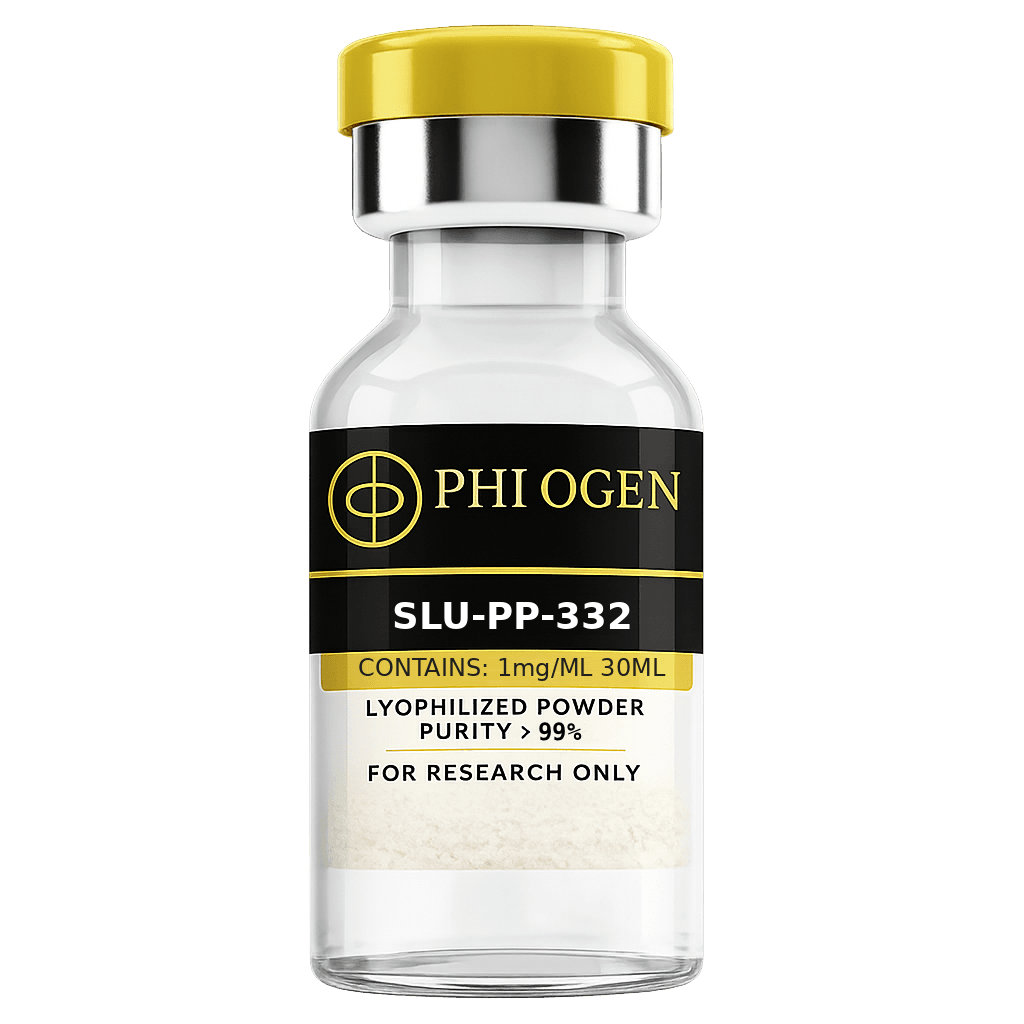
SLU-PP-332 (Liquid)
ERR Agonist — Oral Solution
Estrogen-related-receptor agonist studied for endurance and mitochondrial biogenesis. Liquid formulation in two concentrations.
Fat Loss / Metabolic
Category
From $71.99
Price
Research
Grade
Price
From $71.99
✓ 10% off via PeptidesMuscle
Suggested Protocol
IP rodent research at 5-10 mg/kg/day: 350g subject consumes 1.75-3.5mg/day as 1.75-3.5mL of 1mg/mL solution. For higher-dose arms (15-20 mg/kg), the 5mg/mL format delivers equivalent mass in 3× lower injection volume. Cell-culture working concentrations: 100nM-10μM in DMSO vehicle, diluted from 1mg/mL stock — the low-concentration format minimizes vehicle carry-over.
The injectable format exists because some research questions specifically require bypassing oral absorption. Most published SLU-PP-332 data (Billon 2024 and follow-on work) used oral administration because that matches intended-clinical-use pharmacokinetics, but research questions about direct ERR activation kinetics, hepatic first-pass bypass, or acute PK characterization call for parenteral delivery — typically intraperitoneal (IP) injection in rodents for consistency with other exercise-mimetic research.
Specifications
| Product | SLU-PP-332 (Liquid) |
|---|---|
| Category | Fat Loss / Metabolic |
| Format | Lyophilized powder |
| Price | From $71.99 |
Injectable vs Oral
Why Some SLU-PP-332 Research Is IP, Not Oral
Oral administration matches published Billon 2024 protocols and intended-clinical pharmacokinetics. But research characterizing acute ERR receptor engagement kinetics, pharmacokinetic bioavailability baselines, or tissue-specific distribution studies call for parenteral routes that bypass first-pass metabolism. IP injection in rodents is the standard parenteral alternative — easier than IV access in small subjects, and with well-characterized absorption kinetics. The 1mg/mL solution is sized for this route.
Low-Concentration Rationale
Why Co-Solvent Burden Matters
SLU-PP-332 is hydrophobic and requires co-solvent for aqueous formulation at working concentrations. As concentration climbs, DMSO/PEG content climbs proportionally — and above ~5% DMSO in vehicle, co-solvent effects on CYP induction, membrane fluidity, and cellular stress start confounding ERR-agonism readouts. The 1mg/mL format keeps co-solvent content below that threshold at standard working concentrations, which matters most for cell-culture and ex vivo research where vehicle-effect separation is the analytical priority.
Dose-Volume Matching
When 1mg/mL Is Injection-Volume-Correct
Rodent IP injection volume ceiling: 10mL/kg = 3.5mL in a 350g subject. At 1mg/mL that supports up to 3.5mg total dose per injection — fitting 10 mg/kg/day in standard 350g rodents. Higher-dose arms (15-20 mg/kg = 5-7mg doses) would require injection volumes above the ceiling, which is where the 5mg/mL format becomes the correct choice. Dose and format selection track together, not independently.
Handling & Stability
Pairs Well With


Ready to start?
From $71.99
✓ 10% off via PeptidesMuscle
Administration Outline
IP rodent research at 5-10 mg/kg/day: 350g subject consumes 1.75-3.5mg/day as 1.75-3.5mL of 1mg/mL solution. For higher-dose arms (15-20 mg/kg), the 5mg/mL format delivers equivalent mass in 3× lower injection volume. Cell-culture working concentrations: 100nM-10μM in DMSO vehicle, diluted from 1mg/mL stock — the low-concentration format minimizes vehicle carry-over.
SLU-PP-332 (Liquid) — FAQs
More in Fat Loss / Metabolic
View All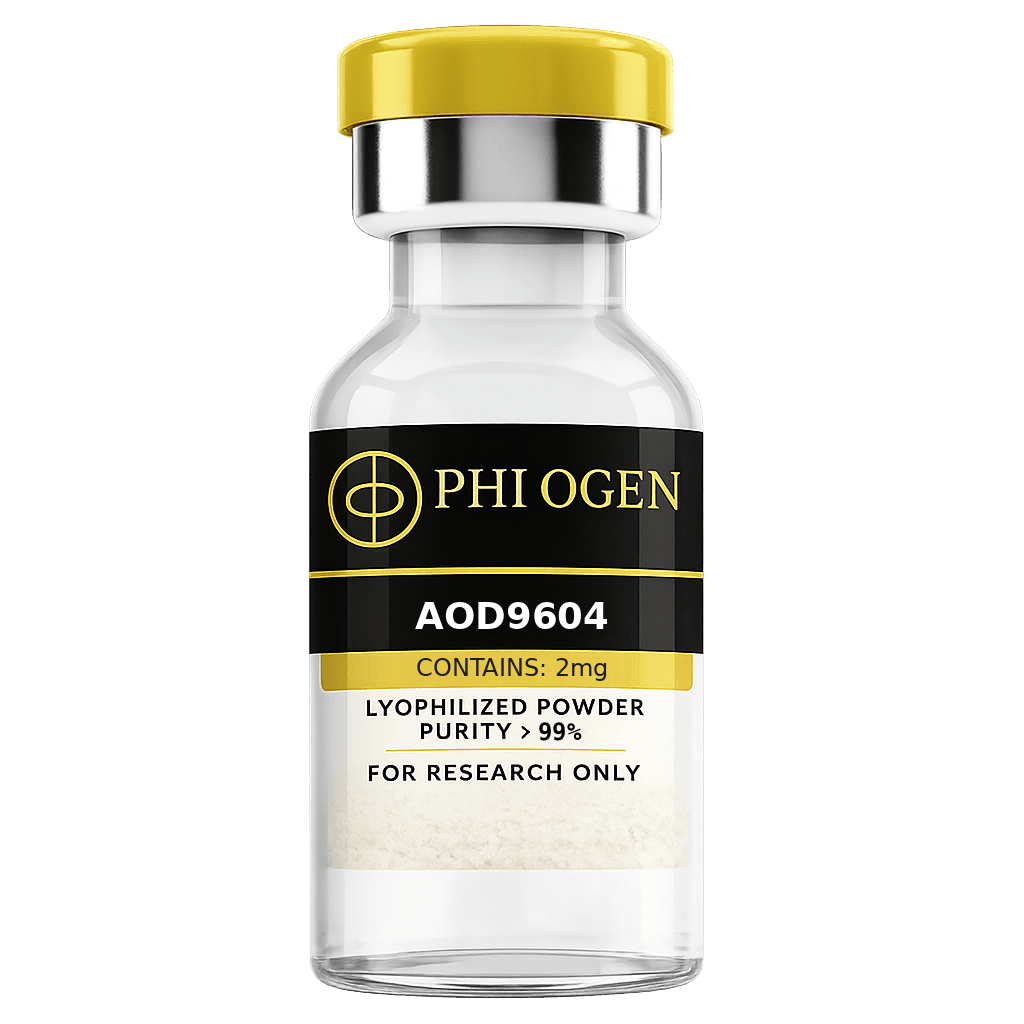
AOD-9604
Modified 16-residue C-terminal fragment of human growth hormone (177-191), engineered to retain lipolytic activity without the metabolic effects of full-length hGH. Available in 2 mg, 5 mg, and 10 mg.