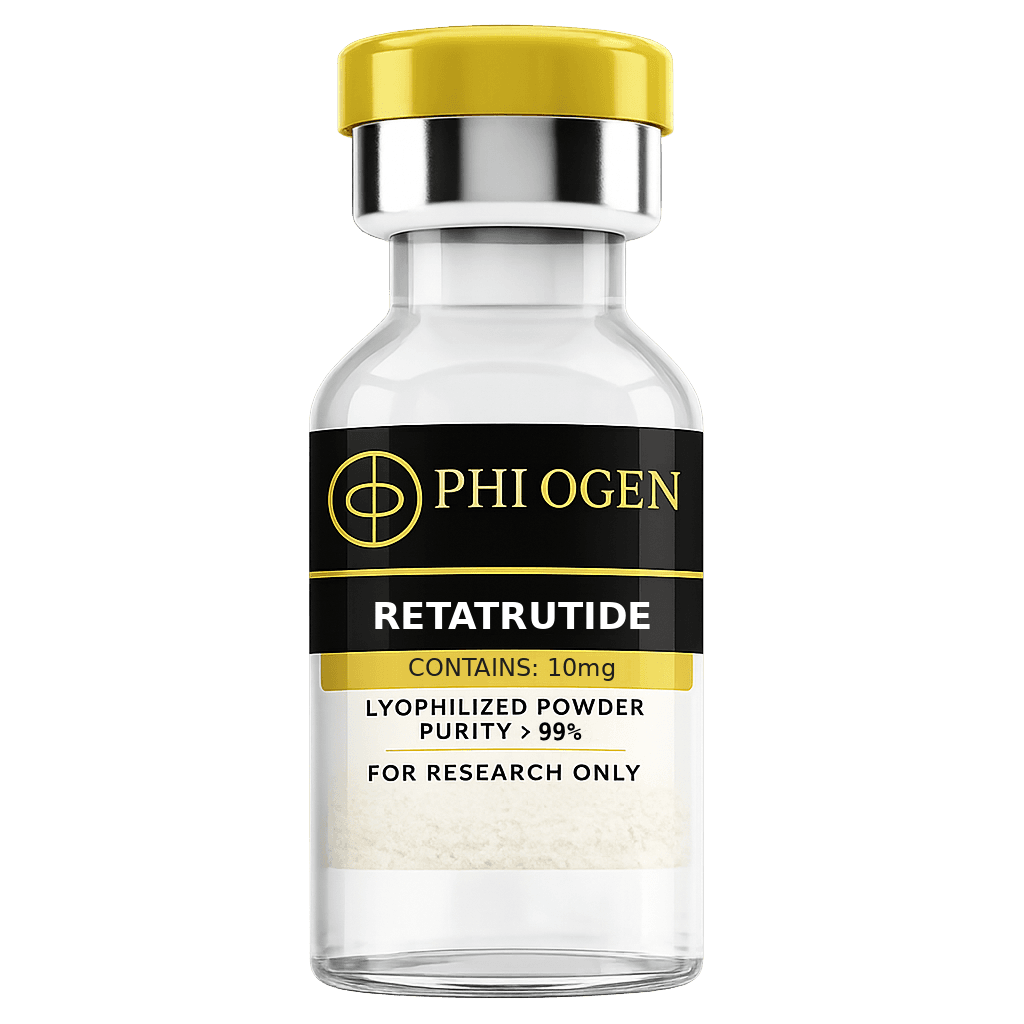
Retatrutide 10mg
Entry Point for Triple Agonist Research
The lower-cost entry point for retatrutide research. Designed for the very gradual dose escalation that the most potent triple agonist demands — start slow, build carefully.
Starting From
$149.99
Sold By
Apollo Peptide Sciences
Suggested Protocol
Escalation entry: 1mg weekly for 4 weeks, then 2mg for 4 weeks, then 4mg for 4 weeks. The 10mg vial covers approximately 8–10 weeks of gradual escalation. SubQ injection once weekly. Monitor GI response carefully at each dose step. Transition to 15mg or 30mg vials for continuation toward maintenance dosing at 8–12mg weekly.
24.2%
Body Wt. Loss
1 mg / wk
Entry Dose
8–12 wks
Escalation
The Most Potent Fat Loss Compound in Research — Why You Start at 1mg and Go Slowly
Retatrutide is the most potent fat loss compound in research — and that potency demands respect. The 10mg vial exists for a specific and important purpose: to provide a lower-cost entry point that enables the gradual, careful dose escalation that every new retatrutide researcher requires before reaching therapeutic maintenance doses.
Unlike semaglutide, where researchers commonly reach 1mg weekly within the first 4 weeks, retatrutide's triple receptor activation — engaging GLP-1, GIP, and glucagon simultaneously — requires an extended, conservative escalation protocol. The starting dose of 1mg weekly may seem trivial, but the compound's glucagon agonism creates GI sensitivity profiles distinct from pure GLP-1 or dual GLP-1/GIP compounds. Rushing escalation produces avoidable side effects; patience during the escalation phase determines long-term protocol success.
The 10mg vial accommodates the full initial escalation phase: at 1mg weekly escalating to 2–4mg weekly over the first 8–12 weeks, a 10mg vial covers the critical adaptation window at a price point appropriate for exploratory research. Researchers learn how their physiology responds to retatrutide's unique triple-mechanism action before committing to the higher-volume 15mg, 30mg, or 60mg formats for maintenance-phase work.
For researchers transitioning from semaglutide or tirzepatide who want to explore the compound that produced the highest fat loss outcomes in clinical history without a large upfront investment, the 10mg vial is the rational starting point. The Phase 2 NEJM data showing 24.2% body weight reduction at 12mg weekly remains the most compelling finding in obesity pharmacology — and the 10mg vial is the entry ticket for that research journey.
Glucagon Sensitivity
Why Retatrutide's GI Profile Is Different From Semaglutide — and Demands More Patience
Semaglutide's GI side effects come primarily from GLP-1 receptor activation slowing gastric emptying. Retatrutide adds glucagon receptor activation, which creates an additional and distinct GI sensitivity profile — including more pronounced nausea and GI motility effects that are less familiar to researchers coming from semaglutide or tirzepatide. Starting at 1mg weekly isn't conservative caution — it's the protocol that actually gets you to therapeutic doses. Researchers who escalate too quickly experience GI side effects severe enough to abandon the protocol before reaching the dose range where retatrutide's fat loss efficacy is documented.
The Escalation Window
8–12 Weeks of Adaptation: What the Entry Dose Phase Is Actually Achieving
The 8–12 weeks from 1mg to 4mg weekly aren't a waste of time waiting to reach "real" doses — they're an active adaptation phase. The body's GLP-1 and glucagon receptor systems are adjusting to sustained agonist stimulation, GI motility patterns are adapting, and the cardiovascular system is accommodating the changes in glycemic control and fat metabolism. By the time you reach 8mg or 12mg maintenance, the receptor systems are primed for the full triple-agonist effect without the overwhelming adaptation response that would occur if those doses were attempted at week one. The 10mg vial covers this phase completely.
Transitioning to Higher Volumes
How to Know When the 10mg Escalation Phase Is Complete — and What Comes Next
The escalation phase is complete when you've spent 4 weeks at 4mg weekly with manageable GI side effects and meaningful appetite suppression. At that point, the 10mg vial is largely consumed and you're ready for the 30mg or 60mg formats that support maintenance-phase dosing at 8–12mg weekly. The signal that you're ready: appetite suppression is consistent and significant, weekly injections are well-tolerated, and body weight is measurably declining. If GI tolerance is still difficult at 4mg, stay at that dose longer rather than escalating — the compound's potency requires respect, but the results for those who complete the escalation are unlike any other compound in research.
Key Benefits
Lower-cost entry format for first-time retatrutide researchers
Covers the full initial escalation phase at 1–4mg weekly dosing
Appropriate supply volume for the 8–12 week GI adaptation window
Reduces financial commitment during the exploratory phase of triple agonist research
Ideal for researchers transitioning from semaglutide or tirzepatide protocols
Allows careful assessment of glucagon agonist sensitivity before scaling dose
Aligns with clinical escalation protocols from the Phase 2 NEJM study
The starting point for accessing the highest documented fat loss efficacy in research
Full Protocol
Escalation entry: 1mg weekly for 4 weeks, then 2mg for 4 weeks, then 4mg for 4 weeks. The 10mg vial covers approximately 8–10 weeks of gradual escalation. SubQ injection once weekly. Monitor GI response carefully at each dose step. Transition to 15mg or 30mg vials for continuation toward maintenance dosing at 8–12mg weekly.
Best Stacked With
More in Weight Management
View All
Semaglutide
The compound behind Ozempic/Wegovy. GLP-1 receptor agonist producing significant appetite suppression, fat loss, and metabolic improvement with once-weekly dosing.