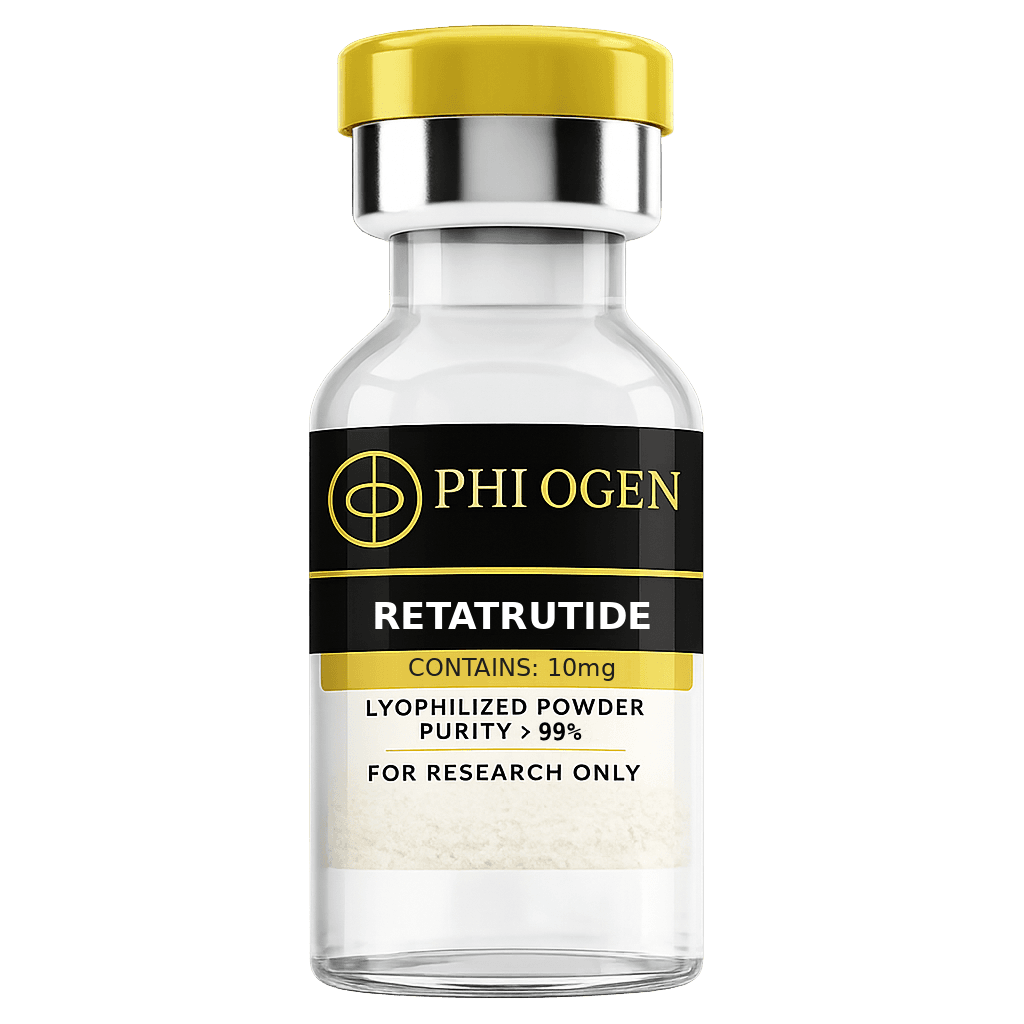
Retatrutide 30mg
Intermediate Bulk — Therapeutic Maintenance Supply
Double the standard 15mg vial. Purpose-built for researchers who have completed escalation and are operating at the 8–12mg weekly maintenance range where retatrutide's peak efficacy is expressed.
Starting From
$349.99
Sold By
Apollo Peptide Sciences
Suggested Protocol
For researchers at established maintenance dose of 8–12mg weekly. Reconstitute with 2–3ml bacteriostatic water. SubQ injection once weekly at consistent intervals. Refrigerate immediately after reconstitution. Do not freeze. The 30mg vial supports 2–4 consecutive weekly injections from a single reconstituted source.
24.2%
Body Wt. Loss
2.5–4 wks
Duration
Bulk 30 mg
Format
Operating at Peak Efficacy: What Maintenance-Phase Retatrutide Actually Produces
The 30mg retatrutide vial is the operational format for researchers who have completed the escalation phase and arrived at therapeutic maintenance dosing. At 8–12mg weekly — the range where Phase 2 clinical data documented 22.8–24.2% body weight reduction — a single 30mg vial provides approximately 2.5–4 weeks of uninterrupted supply. It represents the natural volume step up from the 15mg starter format, and the intermediate bulk tier before the full-scale 60mg.
Retatrutide's triple receptor mechanism — GLP-1, GIP, and glucagon agonism simultaneously — produces its most impressive metabolic effects during sustained, uninterrupted maintenance-phase research. The compound's cumulative effects on hepatic fat, visceral adiposity, and cardiovascular risk markers are time-dependent; protocol interruptions during the maintenance phase undermine the sustained hormonal signaling environment that drives these outcomes. The 30mg vial's extended supply buffer directly reduces this risk.
At 2x the volume of the standard 15mg vial and available at a lower cost per milligram than two separate 15mg purchases, the 30mg format offers genuine economic and operational advantages for researchers who have confirmed their maintenance dose and tolerability. The 30mg is the efficient choice: enough volume for meaningful research continuity, at a cost level appropriate for the intermediate researcher who has validated the protocol and is now optimizing for sustained results.
The glucagon component of retatrutide's mechanism creates an ongoing fat oxidation drive between weekly doses that neither semaglutide nor tirzepatide produces — but only when dosing continuity is maintained. The 30mg vial supports the protocol consistency that allows this third-receptor mechanism to fully express itself over time.
Arriving at Maintenance
What Changes When You Reach 8–12mg Weekly After Proper Escalation
Researchers who complete the escalation and arrive at 8–12mg weekly retatrutide describe a qualitatively different appetite suppression compared to semaglutide or tirzepatide. The glucagon component creates an active fat oxidation drive — a sense of the body running on stored energy rather than just feeling less hungry. Combined with the GLP-1 and GIP receptor effects at maintenance doses, the metabolic state at 8–12mg weekly is the environment in which the Phase 2 NEJM trial documented 22.8–24.2% body weight reduction. The 30mg vial is the supply format for operating in this range without interruption.
The Glucagon Effect at Full Dose
Active Fat Oxidation Between Weekly Doses: What Differentiates Retatrutide From the Others
At maintenance dosing, retatrutide's glucagon receptor agonism creates continuous metabolic pressure that doesn't stop when the appetite-suppressing effects plateau. Even when caloric restriction has partially adapted (which happens with all GLP-1 compounds over time), the glucagon-driven fat oxidation mechanism continues independently. The liver is signaled to mobilize fat stores; fatty acid oxidation in peripheral tissues is upregulated; visceral fat is disproportionately targeted. This is the mechanism that explains why retatrutide continues producing body composition improvements in research subjects even when their caloric reduction has stabilized.
2.5–4 Weeks per Vial
Why This Duration Aligns With the Natural Assessment Intervals of a Serious Protocol
At 8mg weekly, a 30mg vial provides roughly 3.75 weeks of supply. At 12mg weekly, approximately 2.5 weeks. These durations align naturally with monthly check-ins: body weight, waist circumference, and subjective wellbeing assessments typically happen on a 2–4 week cycle in serious research protocols. Opening a new 30mg vial at each assessment interval creates a clean, structured protocol rhythm — reconstitute, run the cycle, assess, decide on any dose adjustments, open the next vial. Fewer vials than the 15mg format, more manageability than the 60mg bulk, and precisely aligned with how systematic metabolic research should be structured.
Key Benefits
2x the volume of the standard 15mg retatrutide vial
Provides 2.5–4 weeks of supply at 8–12mg weekly maintenance dosing
Lower cost per milligram than two individual 15mg vials
Supports the sustained dosing continuity required for glucagon-mediated fat oxidation
Ideal for researchers who have confirmed tolerability and maintenance dose
Reduces reconstitution frequency and protocol management burden
Intermediate bulk format between 15mg and 60mg for flexible commitment scaling
Aligns with the 8–12mg weekly range from Phase 2 NEJM efficacy data
Full Protocol
For researchers at established maintenance dose of 8–12mg weekly. Reconstitute with 2–3ml bacteriostatic water. SubQ injection once weekly at consistent intervals. Refrigerate immediately after reconstitution. Do not freeze. The 30mg vial supports 2–4 consecutive weekly injections from a single reconstituted source.
Best Stacked With
More in Weight Management
View All
Semaglutide
The compound behind Ozempic/Wegovy. GLP-1 receptor agonist producing significant appetite suppression, fat loss, and metabolic improvement with once-weekly dosing.